BACK TO HOMEPAGE >
Honorable Mention: American Architecture Awards 2022
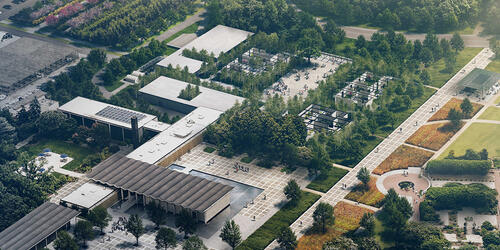
National Bonsai and Penjing Museum at the National Arboretum Washington, D.C | 2021
Architects: Trahan Architects
Lead Architect: Victor F. Trahan, III
Landscape Architects: Reed Hilderbrand LLC.
Client: The National Bonsai Foundation (NBF)
Photographers: Renderings – Design Distill
The design recognizes the extensive collection of the National Bonsai & Penjing Museum, which includes some of the finest trees and viewing stones from across the globe. Located within the U.S. National Arboretum’s Core, the museum is conceived as an immersive and cohesive garden experience, intended to evoke awe and wonder while also drawing connections to the larger Arboretum landscape. The core landscape is a 109- acre site that includes the memorable Ellipse Meadow and stretches from the former M Street Gate to Hickey Lane. The project master plan also addresses the larger landscape of the U.S.
National Arboretum, namely by identifying those landscape systems and character defining features that descend from its history as a farm in the nineteenth century and earlier, to decades of development as a renowned scientific research facility focused on agriculture after its founding in 1927. The Update also evaluates sustainability, accessibility, and safety within the site while also seeking to reduce impervious surfaces across the National Arboretum. The design for the Museum is about deferring to the power of the Bonsai & Penjing. The architectural expression is subtle — composed of elemental components that respond to the unique environmental conditions of the site.
We wanted the visitor to embark upon a journey that created a sense of mystery, where the boundaries between the landscape and the architecture are blurred, inviting people to reflect upon these unique cultural artifacts within a lush garden setting. The design of the Bonsai and Penjing Museum establishes a pervasive grove of understory trees as the principal image and identity of the Museum. Mixed species surround and frame the various exhibitions and the central court. The architecture is restrained and practical, deferring to the power of the bonsai. Garden walls organize a meandering path through the display and make available multiple orientations for the bonsai — an elegant, neutral backdrop that allows generous air circulation to mitigate heat.
Charred wood posts and trellises rise above the exhibitions to filter light and shape a sense of enclosure. Built of durable, simple materials, the pavilions read as a unified family of structures while framing subtle cultural differences of the bonsai and penjing within. The Concept Design organizes the Museum’s program around a central court which orients the visitor to a network of paths that lead to the four exhibitions, expanded classroom, and administrative services. The exhibitions, conceived as gardens rather than buildings, blur their boundaries with the larger, surrounding garden to offer continuing revelation of surprise and discovery.