BACK TO HOMEPAGE >
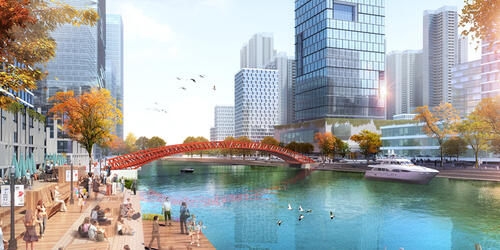
Urban Design and Master Plan for Nansha Bay | 2018
Guangzhou, Guangdong, China
Architects: ISA Internationales Stadtbauatelier, Beijing, China
Client: Guangzhou Municipal Planning And Natural Resources Bureau (Nansha District), Guangzhou, Guangdong, China
The planning vision of the City of Guangzhou, an important city in southern China, for its new district in Nansha is a “bridge” that integrates the development of both sides of the Pearl River, where Nansha Bay is an area of great significance. Nansha Bay is an estuary on the south side of Guangzhou. Belonging to the Nansha free trade zone, it is a key link node connecting the massive urban agglomeration in the Pearl River delta region. Thanks to the first bridge on the Pearl River, Guangzhou has been conveniently connected with industrial-financial cities: Dongguan and Shenzhen at Nansha Bay where Guangzhou has also been tied with other international cities by aid of ferry (two hours away from Hong Kong) and cruise home port (second largest in China). This Urban Design and Master Planning project, building on the efforts of extensive site investigations, data collection and related industry research, aims at creating a new spatial order and urban corridors within the existing urban context to enhance the livability and overall image of the Nansha district. The most challenging part of the project is to balance different interests of developers, owners, government agencies and local people due to the complex status of the land ownership in the planning area. A small dynamic organization in Hong Kong not only jointly owns the land with Nansha government but also has been deeply involved in the business operations in this area during the past two decades. To facilitate a joint effort of different driving forces for the future development of the Nansha Bay area, a number of workshops were conducted by the design team, assisted by working models in various scales, to engage different interested parties so that a consensus on alternative possibilities can be developed for the site's future physical development. The end results prove this process to be of great success.