BACK TO HOMEPAGE >
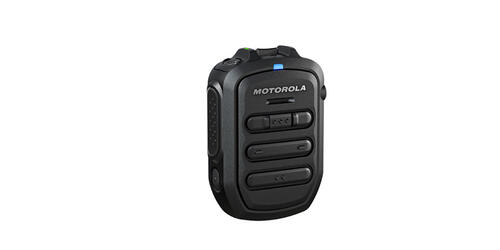
WM500 Wireless Remote Speaker Microphone 2019-2020
Designers: Innovation Design Team, Motorola Solutions, USA
Manufacturer: Motorola Solutions, USA
The WM500 WIRELESS PoC REMOTE SPEAKER MICROPHONE collaborates with a smartphone to provide push-to-talk communication over cellular. It provides a tactile interface, voice control, enhanced audio performance and added durability for conditions encountered in Public Safety and Commercial environments.
Design Challenge
Modern cellular networks and equipment offer Push-to-talk (PTT) services which give phones simple talk and listen communication capabilities. This communication method offers two-way radio efficiency over a single smart device. The smartphone form factor is not well suited to the rigors of commercial and public safety environments. Large attention grabbing screens, touch interfaces, and non tactile controls are not suitable for the “eyes up” performance required by users. Designers were challenged to create a solution emulating the mission critical tactility and audio performance of a two way radio microphone coupled with the power and versatility of a smartphone.
Design Solution
Research showed that a collaborative device which could bridge the gap between a smartphone and a two-way radio would be an effective way to meet communication needs for users. Users of traditional two way radios are accustomed to using a remote speaker microphone as the interface to the device. This solution provides an updated wearable microphone form factor with tactile controls for PTT, audio, and programmable functions. Designers integrated voice control and programmable keys into the speaker grill of the device with a unique spacing and key feel to enable blind use as the device is worn on the body.
Design Impact
Many organizations demand the flexibility and cost benefits of a “bring your own device” model. This solution allows the full functionality of the user’s smartphone while adding a rugged mode of interface for instant critical communication. The user’s smartphone is able to remain protected “in the pocket” while the WM500 interfaces wirelessly to it. This allows cost savings and the ability to integrate with equipment that is already in place. Users are positive about the functionality while organizations benefit from the efficiency and cost effectiveness afforded by the solution.
FORM
The form factor was developed to evoke response and usage similar to a traditional two-way radio speaker microphone. This creates an intentional linkage with the instant talk-and-listen capabilities expected with two-way radio functionality. Such a form is unexpected considering the underlying communication means is an LTE phone but this presents a solution with tactility and physical ergonomics appropriate to mission and service critical environments. The front speaker port detail visually reinforces high audio capability. The front keypad shares space with the speaker porting which allows keys to be distributed into memorable zones for quick and blind access by users.
SAFETY
A key driver from early research was to remove the attention-grabbing smartphone screen from the system. The phone itself remains but is now out of sight in a pocket or purse. The device becomes the primary physical interface with the system so users have no need to access the host smartphone during voice communication. Additional voice recognition functionality also keeps the phone, and its screen, hidden. This adds up to keeping users safer by improving attention and distractions.
Bluetooth connectivity eliminates the need for a traditional wired connection preventing the physical hazards associated with a dangling cable.
INNOVATION
The WM500 explores the combination of the best from two very different worlds. The “app-centric” smartphone is universal in just about every work environment today. Push-to-talk over cellular service is yet another breakthrough in this constantly evolving medium. The introduction of a collaborative device which emulates the proven mission/service critical communication interaction method is the real innovation here. The WM500 eliminates the compromises of using PTT over cellular on a consumer oriented cell phone and establishes a safe, efficient, and sustainable model for organizations to stay connected.