BACK TO HOMEPAGE >
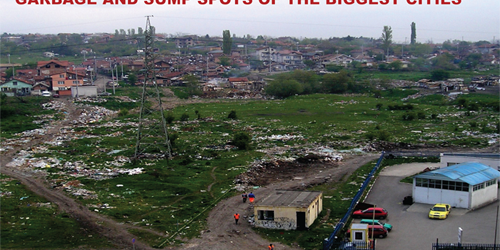
Faculteta - Sofia - Bulgaria
Nina Milkova Ilieva - NIMA

 |
 |
Biography
Our proposal for the site in Sudstadt, Nuernberg re-imagines the traditional residential city block in Europe, as a versatile location that promotes integration, connectivity and social interaction, while offering more inviting public spaces to the urban ecology. The new structure offers a contemporary typology in the urban city block for the new Europe, where diverse lifestyles and cultures are encouraged to be celebrated and embraced; increasing great value to the evolving city. Instead of closing off the green space and eliminating public space by building the residential apartments on the periphery, we are strategically opening the block and amalgamate it with the rest of the city.
The new connections, pathways, promenades and public spaces offer formal and informal temporal events, playgrounds, communal farming and exhibit spaces. These new engaging activities will reinvigorate life into the existing district, and add regional value and integrity. The new housing ill create mutual work and common spaces on the ground floor, where residents can host country thematic consultations, classes and discourses to the city and nearby municipalities of Nurnberg. This will complement the existing professional development classes offered by the Sudpunkt.
To accommodate for various lifestyles, new co-housing typologies were created for residents to share common areas, such as kitchen, dining, living, and workspaces. The pliable floor plans adjust with ease for the interchanging demographic. Apartment layouts come with various room options, satisfying any personal preference. The diversity of events and culture will help generate a new quality of life for the district, turning it as an attractive and prosperous hub. Flexibility and adaptability are essential for the success of this new residential and cultural center.
Sustainable strategies for integrating Romani communities in “Faculteta” neighborhood in Sofia, Bulgaria
The recent EU enlargement and large-scale migration across the continent have brought issues to the whole European community, which only a decade ago were not that relevant to its agenda. Today, the whole European Union has to face and solve problems, which before were mainly restricted to a few countries in Central and South Eastern Europe. These issues relate to Romani inequality and integration, and have brought recent intense discussions, as well as new actions and programs across the continent. In 2008 in Brussels, for example, an In- tegrated Platform for Roma Inclusion[1] was created, to stimulate cooperation between the member states, civil society and European Institutions, and support initiatives, cooperation and better understanding of the Roma problems. At present Romani people across Europe are still suffering from a long term disinvestment in the physical ca- pacity of their communities to deliver basic health, welfare and economic growth opportunities. Steps to im- prove the housing conditions in Roma neighborhoods have been mostly sporadic and/or short term solutions, in particular due to the illegal status of many of the houses in the Roma communities. In the past, the national and regional governments have approached these communities with culturally inappropriate infrastructure and tech- nical solutions, resulting in the continued marginalization of this ethnic group and the development of mutual distrust about the motivations and efficiency of interventions in public improvements. The Bulgarian Romani neighborhood “Faculteta,” in the outskirts of the capital city of Bulgaria, Sofia, is a good illustration of the scale and complexity of the problems Roma communities have to face today. Three main case studies were identified and future strategies were discussed at and after a workshop supported by Archis Berlin and Frontal, Bucharest in June 2010 in Sofia, Bulgaria. The issues were brought to public discussion, later that year at Sofia Architecture Week. The work will attempt to establish a sustainable way to integrate positive work- ing conditions that do not lead to the destruction of the neighborhood, a solution widely supported also by the Romani residents. The key questions will be focused on the new urban typology which would emerge from the new strategies. This will develop a new approach, incorporating the existing informal conditions, while improving the city’s regulations and offering a more humane city environment for diverse ethnic and cultural groups. Until now, the bottom-up approach initiated by the Roma residents and volunteers, and the top-down approach of regulated long-term planning by the city administration, backed up with whole government politics, have not been done simultaneously. New architectural and urban approaches are essential for responding effectively to these challenges. How can they not only resolve the issues currently so common in South-East Europe, but also inform better the global discussion of the evolution of the 21st century city? How can they legalize tenure, considering the overall devel- opment of city planning and administration?